The short version
- The menopause transition is when women start losing lean mass, so this is the time to begin strength training if you have not already.
- Health guidelines call for muscle-strengthening work covering all major muscle groups on two or more days a week.
- In trials, postmenopausal women gained lean mass with programs that averaged three sessions a week for about 16 weeks.
- You need a sturdy chair, a counter or bench, and two pairs of dumbbells: one light, one moderate.
- Progress by adding repetitions first, then weight. The 12-week plan below shows how.
Why strength training matters now
A long-term US study scanned women's bodies through the menopause transition. Lean mass, which is mostly muscle, started to fall when the transition began and kept falling until about two years after the final period.1 Muscle you do not use during these years is muscle you lose.
Training reverses the direction. A pooled analysis of studies in postmenopausal and older women found small to moderate gains in lean mass from resistance training. The programs averaged three sessions a week, about seven exercises, for about 16 weeks.3 A larger analysis of 101 randomized trials found that resistance training was the best type of exercise for building muscle after menopause, while aerobic exercise did more for fat loss.4
The World Health Organization recommends muscle-strengthening activity for all major muscle groups on two or more days a week for every adult.2 This routine is built to meet that.
Need more than general advice? Our community offers professional, personalized nutrition and exercise plans. Join the Fit Over 40 community
Before you start
- Check with your doctor first if you have heart disease, uncontrolled high blood pressure, osteoporosis, a recent injury or surgery, or if you get chest pain or dizziness with effort.
- Equipment. A sturdy chair or box, a kitchen counter or bench, a mat, and two pairs of dumbbells.
- Warm up for five minutes. March on the spot, circle your arms, and do ten slow bodyweight squats to the chair.
- Breathe. Breathe out on the effort, in on the return. Do not hold your breath.
- Pain rule. Muscle effort and mild soreness the next day are expected. Sharp, pinching or joint pain means stop that move.
The eight moves
Do them in this order. Rest 60 to 90 seconds between sets.
Box squat
Thighs, glutes, core- How to do it
- Stand in front of a chair, feet a little wider than your hips. Reach your arms forward, push your hips back and lower until you touch the seat lightly. Press through your whole foot and stand up tall.
- Check yourself
- Knees point the same way as your toes. Chest stays lifted. Heels stay down.
- Easier
- Sit fully on the chair, then stand.
- Harder
- Hold one dumbbell upright against your chest.
Hip hinge
Hamstrings, glutes, lower back- How to do it
- Stand holding dumbbells in front of your thighs. Soften your knees. Push your hips straight back and let the weights slide down your legs to just below the knee. Squeeze your glutes to stand.
- Check yourself
- Your back stays long and flat from head to tailbone. The movement comes from the hips, not from rounding the spine.
- Easier
- No weights, hands sliding down your thighs.
- Harder
- Heavier dumbbells, and lower to mid-shin if your back stays flat.
Incline push-up
Chest, shoulders, triceps, core- How to do it
- Place your hands on a counter or bench, slightly wider than your shoulders. Walk your feet back until your body is one straight line. Bend your elbows to bring your chest toward the edge, then push away.
- Check yourself
- Hips do not sag or pike. Elbows angle back at about 45 degrees, not straight out to the sides.
- Easier
- Use a higher surface or a wall.
- Harder
- Use a lower surface such as a sturdy chair seat, then the floor.
Bent-over row
Upper back, rear shoulders, biceps- How to do it
- Hinge forward as in move 2 and hold that position, arms hanging. Pull the dumbbells toward your lower ribs, elbows brushing your sides. Pause, then lower slowly.
- Check yourself
- Shoulders stay away from your ears. Your torso does not bob up and down.
- Easier
- Row one arm at a time with the other hand resting on a chair.
- Harder
- Add a two-second pause at the top of each repetition.
Glute bridge
Glutes, hamstrings, pelvic stability- How to do it
- Lie on your back, knees bent, feet flat and hip-width apart. Press through your heels and lift your hips until your body forms a line from shoulders to knees. Hold for one second and lower.
- Check yourself
- You feel it in your glutes, not your lower back. Ribs stay down as the hips rise.
- Easier
- Lift only halfway.
- Harder
- Rest a dumbbell across your hips, or lift one foot off the floor.
Overhead press
Shoulders, triceps, upper back- How to do it
- Stand with dumbbells at shoulder height, palms facing in. Tighten your stomach and press both weights straight up until your arms are long. Lower with control to the shoulders.
- Check yourself
- Your lower back does not arch. If it does, the weight is too heavy.
- Easier
- Press one arm at a time, or sit on a chair with back support.
- Harder
- Lower for a slow count of three.
Loaded carry
Grip, core, hips, posture- How to do it
- Pick up your heavier dumbbells and stand tall. Walk slowly for 30 seconds with short, even steps. Put the weights down by hinging at the hips. That is one set.
- Check yourself
- Shoulders level, eyes forward. Do not lean back or let the weights swing.
- Easier
- Carry one lighter weight in each hand for 20 seconds.
- Harder
- Carry a single weight on one side for 30 seconds, then switch.
Dead bug
Deep abdominals, hip control- How to do it
- Lie on your back with arms pointing at the ceiling and knees bent above your hips. Slowly lower one arm behind your head while you straighten the opposite leg toward the floor. Return and switch sides.
- Check yourself
- Your lower back stays gently pressed toward the mat throughout. Only go as low as you can without it lifting.
- Easier
- Move the legs only, tapping one heel to the floor at a time.
- Harder
- Hold a light dumbbell in each hand.
Your 12-week plan
Leave at least one rest day between sessions. For the carry, one set is 30 seconds of walking. For the dead bug, count each side as one repetition.
| Weeks | Sessions a week | Sets | Repetitions | Goal |
|---|---|---|---|---|
| 1 to 4 | 2 | 2 | 10 to 12 | Learn each move. Finish every set feeling you could do 3 more. |
| 5 to 8 | 2 or 3 | 3 | 8 to 12 | Add weight where 12 feels easy. Last 2 repetitions should be hard. |
| 9 to 12 | 3 | 3 | 8 to 10 | Heavier weights. Use the harder versions of moves you have outgrown. |
By weeks 9 to 12 you will be doing about 72 sets a week across the eight moves. In a 2024 analysis of trials in postmenopausal and older women, programs of roughly 44 and roughly 77 weekly sets both improved body fat and metabolic health compared with no training. The authors rated the certainty of that evidence as low, so treat the numbers as a guide.5
When to add weight
Use the two-for-two rule. When you can do two more repetitions than planned on your last set, in two sessions in a row, move up to the next weight. Go up in the smallest step you have.
A sample week
| Day | Weeks 1 to 4 | Weeks 9 to 12 |
|---|---|---|
| Monday | Strength | Strength |
| Tuesday | 30-minute brisk walk | 30 to 45 minutes of cardio |
| Wednesday | Rest or gentle walk | Strength |
| Thursday | Strength | 30 to 45 minutes of cardio |
| Friday | 30-minute brisk walk | Strength |
| Saturday | Longer walk, cycle or swim | Longer walk, cycle or swim |
| Sunday | Rest | Rest |
Feed the work
Muscle is built from protein. An international expert group recommends 1.0 to 1.2 grams per kilogram of body weight a day for healthy older adults, and at least 1.2 grams for those who exercise regularly.6 That guidance was written for people over 65, so use it as a reference point and check with your clinician if you have kidney disease.
The menopause food list shows what a day of protein-rich eating looks like.
After 12 weeks
Keep going. The muscle you build stays only while you keep training. Change one thing every few weeks to stay challenged: a heavier weight, a harder version of a move, or a slower lowering phase. Re-measure your waist and note which weights you now use. Those two numbers show your progress better than the scale. For the bigger picture on body changes, read menopause belly fat: what causes it and what reduces it.
Common questions
Will lifting weights make me bulky?
No. In pooled studies of postmenopausal and older women, resistance training produced small to moderate gains in lean mass. Expect to look firmer and feel stronger, not larger.3
How heavy should my dumbbells be?
Pick a weight that lets you finish the planned repetitions with good form while the last two feel hard. For most beginners that means roughly 5 to 8 lb for the press and row and 10 to 18 lb for the hinge and carry. Start lighter if unsure.
Can I do this with osteoporosis or joint pain?
Many women with these conditions benefit from strength training, but the exercise choice and loading need to be individual. Ask your doctor or a physical therapist before you start, and avoid loaded forward bending of the spine until you have been advised.
References
- Greendale GA, Sternfeld B, Huang M, et al. Changes in body composition and weight during the menopause transition. JCI Insight. 2019;4(5):e124865. https://doi.org/10.1172/jci.insight.124865
- World Health Organization. Physical activity: fact sheet. https://www.who.int/news-room/fact-sheets/detail/physical-activity
- Thomas E, Gentile A, Lakicevic N, et al. The effect of resistance training programs on lean body mass in postmenopausal and elderly women: a meta-analysis of observational studies. Aging Clin Exp Res. 2021. https://doi.org/10.1007/s40520-021-01853-8
- Khalafi M, Habibi Maleki A, Sakhaei MH, et al. The effects of exercise training on body composition in postmenopausal women: a systematic review and meta-analysis. Front Endocrinol. 2023;14:1183765. https://pubmed.ncbi.nlm.nih.gov/37388207/
- Nunes PRP, Castro-e-Souza P, de Oliveira AA, et al. Effect of resistance training volume on body adiposity, metabolic risk, and inflammation in postmenopausal and older females: systematic review and meta-analysis of randomized controlled trials. J Sport Health Sci. 2024. https://pmc.ncbi.nlm.nih.gov/articles/PMC10980902
- Bauer J, Biolo G, Cederholm T, et al. Evidence-based recommendations for optimal dietary protein intake in older people: a position paper from the PROT-AGE Study Group. J Am Med Dir Assoc. 2013;14(8):542-559. https://pubmed.ncbi.nlm.nih.gov/23867520/
Every health claim above links to its source. Before publication the article was read and approved by Claudia Muresian, health psychologist, fitness coach and healthy nutrition specialist. It is general information and cannot take your personal history into account, so use it to prepare for a conversation with your own clinician.
Spotted an error? Tell us and we will check it.
Workouts to try
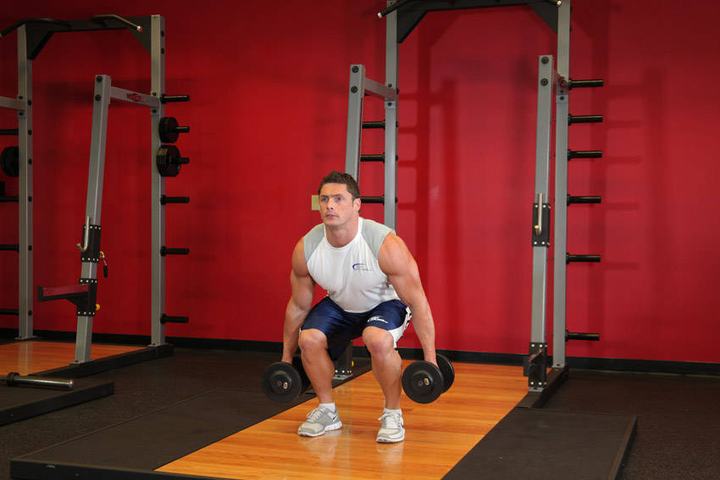 Full-body dumbbell workout for beginners30 minutes, 7 exercises
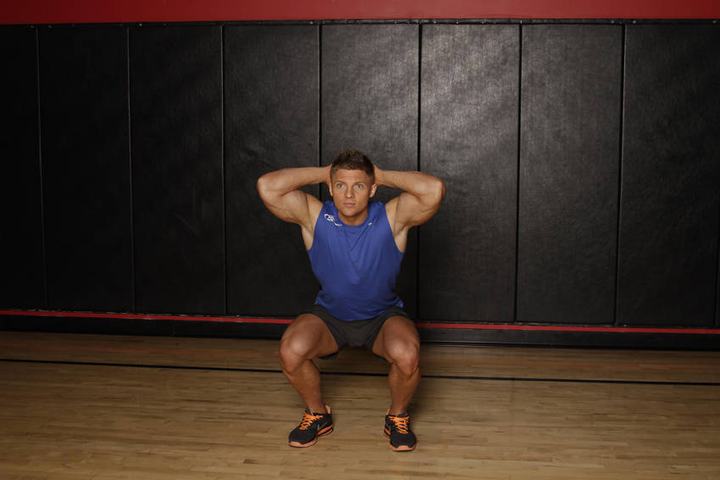 Lower body and glute workout30 minutes, 6 exercises
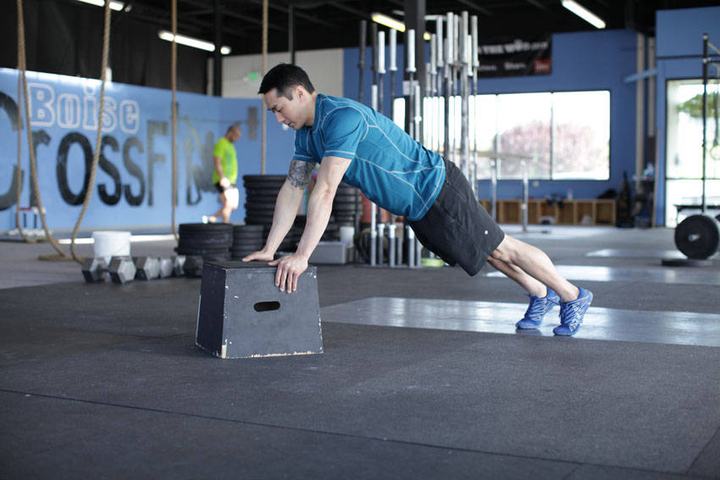 Upper body and posture workout30 minutes, 7 exercises