The short version
- Around menopause, women gain fat and lose muscle at the same time, so the scale alone misleads you.
- Losing even 10% of your current weight lowers the risk of obesity-related disease.
- Strength training two or more days a week protects muscle while you lose fat.
- For older women, health benefits of walking were seen from about 4,400 steps a day and leveled off near 7,500.
- A Mediterranean-style way of eating with enough protein is the best-supported food pattern for this stage.
Step 1: Measure your waist, not just your weight
In a large US study, body weight rose at a steady pace through midlife, while fat gain doubled in speed and lean mass began to fall at the start of the menopause transition.1 A tape measure captures that shift. Risk rises when a woman's waist is over 35 inches.2 Here is how to measure your waist correctly.
Need more than general advice? Our community offers professional, personalized nutrition and exercise plans. Join the Fit Over 40 community
Step 2: Set a realistic target
You do not need to return to your weight at 30. Losing just 10% of your current weight helps lower the risk of developing diseases linked to obesity.2 For a woman who weighs 180 pounds, that is 18 pounds.
Step 3: Lift something twice a week
Dieting without strength training costs you muscle. Across 101 trials in postmenopausal women, resistance training was the type of exercise that built muscle, and exercise overall reduced fat mass, waist size and visceral fat.3 Health guidelines ask for muscle-strengthening work on two or more days a week.4
- New to exercise: no-equipment workout for beginners
- Ready for weights: full-body dumbbell workout
Step 4: Walk more than you do now
Aerobic activity had the stronger effect on fat loss in the trials.3 The target is 150 to 300 minutes of moderate activity a week.4 If you count steps, a study of nearly 17,000 older women found lower death rates from about 4,400 steps a day, with benefits leveling off around 7,500.5 See how many steps a day women over 50 need.
Step 5: Eat enough protein
Expert groups suggest 1.0 to 1.2 grams of protein per kilogram of body weight a day for healthy older adults, which is about 0.45 to 0.55 grams per pound.6 Spread it over three meals. Details are in how much protein women over 50 need.
Step 6: Change the plate, not just the portion
Trials of the Mediterranean diet in menopausal women are small, but they point to lower weight, blood pressure and cholesterol.7 Start with the 7-day high-protein meal plan or the guide to the Mediterranean diet in menopause.
Step 7: Fix what is stealing your sleep
Poor sleep makes you hungrier and less active the next day. If night sweats wake you, they can be treated. See menopause sleep problems and what helps.
What to skip
- Crash diets and long fasts that leave you too tired to train.
- Detox teas, fat-burner pills and waist trainers.
- Any plan that promises a number of pounds by a date.
When to talk to your doctor
See your doctor before starting if you have heart disease, diabetes, kidney disease or take regular medication, and at any time if you gain weight quickly without explanation. Your doctor can also discuss medical treatments for weight when lifestyle changes are not enough.
Common questions
Why is it harder to lose weight after 50?
Lean mass starts to fall during the menopause transition, and muscle uses more energy at rest than fat does. Less muscle means a slightly lower daily energy need, so the eating habits that held your weight steady at 40 can slowly add fat at 55.1
How fast should I lose weight?
Slowly. Rapid loss takes muscle with it, which is the opposite of what you want at this age. A steady, modest pace that you can keep up for months beats a fast start you abandon.
Do I need to count calories?
Not necessarily. Many women do well by changing the plate instead: half vegetables, a palm of protein, a fist of whole grains, and fewer sugary drinks and snacks. If your waist has not changed after six to eight weeks, tracking for a short time can show where the extra is coming from.
References
- Greendale GA, Sternfeld B, Huang M, et al. Changes in body composition and weight during the menopause transition. JCI Insight. 2019;4(5):e124865. https://doi.org/10.1172/jci.insight.124865
- The Menopause Society. Are you officially overweight? https://menopause.org/for-women/menopauseflashes/exercise-and-diet/are-you-officially-overweight-
- Khalafi M, Habibi Maleki A, Sakhaei MH, et al. The effects of exercise training on body composition in postmenopausal women: a systematic review and meta-analysis. Front Endocrinol. 2023;14:1183765. https://pubmed.ncbi.nlm.nih.gov/37388207/
- World Health Organization. Physical activity: fact sheet. https://www.who.int/news-room/fact-sheets/detail/physical-activity
- Lee IM, Shiroma EJ, Kamada M, Bassett DR, Matthews CE, Buring JE. Association of step volume and intensity with all-cause mortality in older women. JAMA Intern Med. 2019;179(8):1105-1112. https://doi.org/10.1001/jamainternmed.2019.0899
- Bauer J, Biolo G, Cederholm T, et al. Evidence-based recommendations for optimal dietary protein intake in older people: a position paper from the PROT-AGE Study Group. J Am Med Dir Assoc. 2013;14(8):542-559. https://pubmed.ncbi.nlm.nih.gov/23867520/
- Gonçalves C, Moreira H, Santos R. Systematic review of Mediterranean diet interventions in menopausal women. AIMS Public Health. 2024;11(1):110-129. https://pmc.ncbi.nlm.nih.gov/articles/PMC11007410/
Every health claim above links to its source. Before publication the article was read and approved by Claudia Muresian, health psychologist, fitness coach and healthy nutrition specialist. It is general information and cannot take your personal history into account, so use it to prepare for a conversation with your own clinician.
Spotted an error? Tell us and we will check it.
Workouts to try
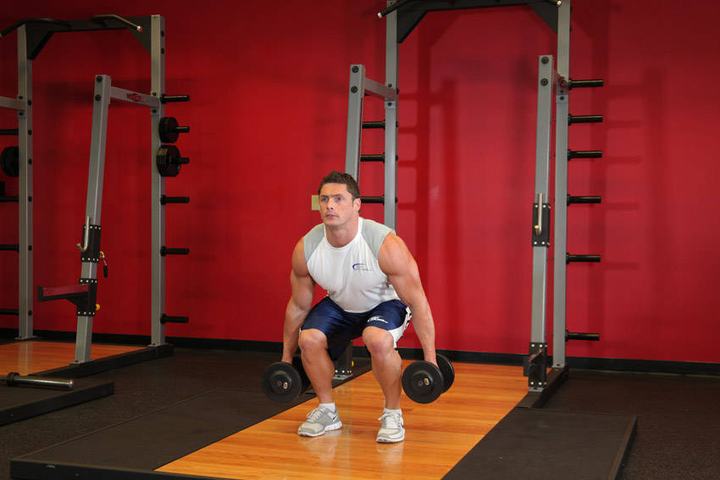 Full-body dumbbell workout for beginners30 minutes, 7 exercises
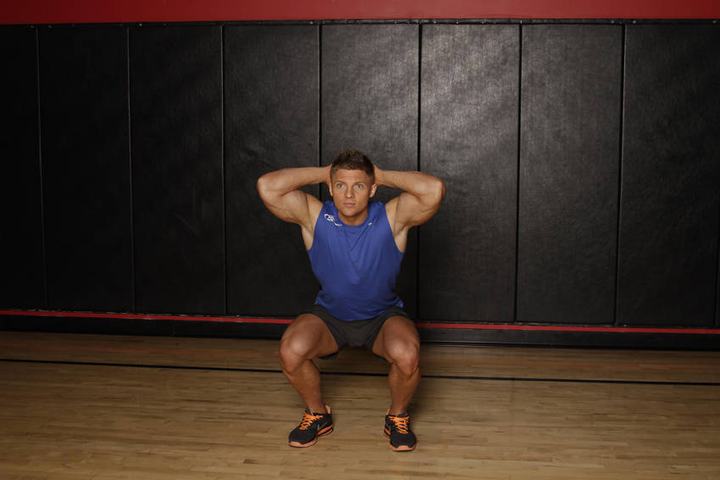 Lower body and glute workout30 minutes, 6 exercises
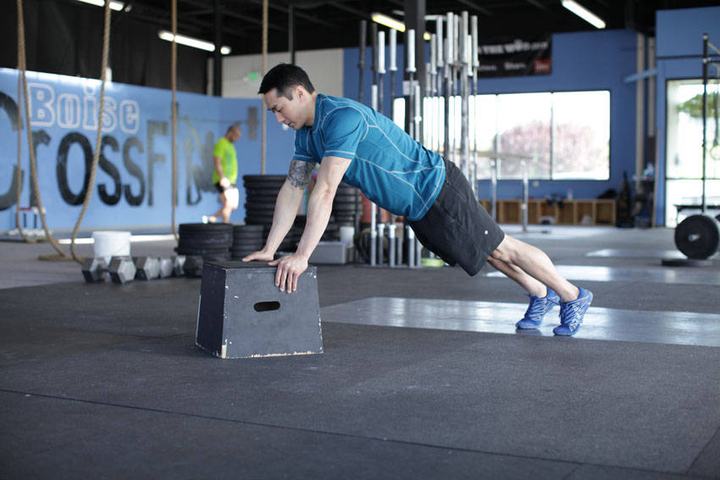 Upper body and posture workout30 minutes, 7 exercises